How to Clean an Electric Skillet
The user manual for your specific model should always be followed, but I have pro tips for how to clean an electric skillet, regardless of if it is dishwasher-safe, immersible or non-immersible.
Servings: 1 electric skillet
Cost: $1
Equipment
- scouring pad or sponge non-scratch
- dishwasher
Ingredients
For Dishwasher-Safe Skillets
- dishwasher detergent
For Immersible Hand-Wash Only Skillets
- hot water
- dish soap
For Non-Immersible Skillets
- hot water
- dish soap
- paper towels
For Tough Stains
- baking soda
Instructions
For Dishwasher-Safe Skillets
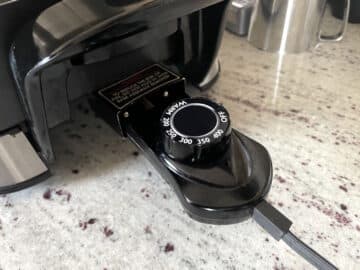
- With all electric skillets, whether immersible and dishwasher-safe or not, unplugging the heating control should always be your first step. Some skillets have helpful removable bases as well, and if yours does, once it is cool, go ahead and remove the base in addition to the cord.
- Begin by clearing out any extra cooking grease in the skillet once it has cooled. See notes for tips.Using paper towel, wipe out any leftover grease and extra food bits. You can also give it a rinse before putting the skillet in the dishwasher. Though this may seem somewhat counterproductive to using the dishwasher, it will help your dishwasher successfully clean it completely.

- Finally, go ahead and clear out the bottom rack of your dishwasher to make room for the skillet. Simply place your skillet securely in the rack, ensuring it won’t fall or bump anything fragile while the dishwasher runs. Now, you can either go ahead and run the dishwasher or wait until it’s full.

For Immersible Hand-Wash Only Skillets
- As with the dishwasher-safe skillets, even if yours is immersible, you will still need to make sure the cord and temperature control are safely disconnected before beginning. By disconnected, this doesn’t mean simply unplugged from the wall, but removed from the skillet itself. If this isn’t disconnected, your skillet will likely be damaged from the water.
- Again, with any skillet, before cleaning you’ll want to safely discard any leftover grease. Our favorite method is to simply pour the cooled grease into an empty disposable container and toss it in the trash.
- We’ve found that the best way to wash an electric skillet is to begin by filling the kitchen sink about halfway with hot, soapy water. This will help with any food that has dripped over the edges and ensures that the exterior of the skillet gets cleaned.

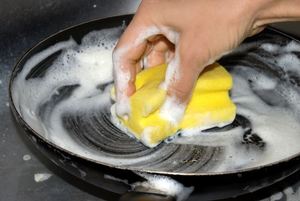
- At this point, gently lower the skillet into the soapy water, which will likely fill the sink as it is displaced. With a non-scratch sponge, scrub away the food particles and any remaining cooking juices until the frying pan is clean. Gently turn the pan to wash the sides and exterior of the skillet with the sponge. Rinse the soap off with hot, running water and let it air-dry.
For Non-Immersible Skillets
- Just as with each style of electric skillets so far, you’ll want to completely disconnect the cord and temperature control from the skillet in order to safely clean it.
- Once again, be sure to discard any extra cooking oil before beginning to clean the skillet.
- To clean a non-immersible skillet, begin by dampening a paper towel or clean cloth with hot water. With the damp towel, wipe down any part of the skillet that is messy. Once you run the towel over it the first time, dampen it again and drizzle soap either on the towel or directly on the skillet. Gently scrub the skillet with the soap and damp towel.
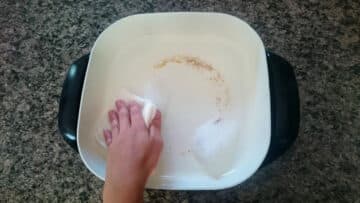
- Next, dampen a fresh towel and thoroughly wipe away the soap, re-dampening the towel and wiping down the skillet as many times as necessary. Once you’re certain the soap residue is gone and the skillet is clean, either towel-dry the appliance or leave it to dry in a dish rack.
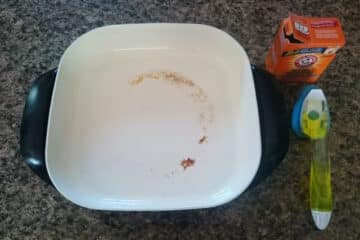
For Tough Stains
- To begin, pour a moderate amount of baking soda over the stains. You’ll want enough to cover the stain, and it doesn’t take too much. Feel free to sprinkle on as much as you feel comfortable with.

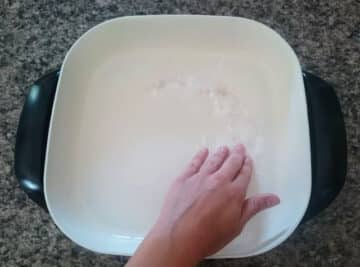
- Next, add water to your baking soda. You can drip the water onto the baking soda with a spoon, measuring cup, or even a drinking glass. Mix the baking soda and water until it forms a paste. Let the baking soda mixture sit on the stained area for at least a few minutes, if not longer. For the toughest stains, you may want to let it soak for an hour or so.
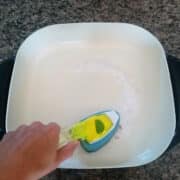
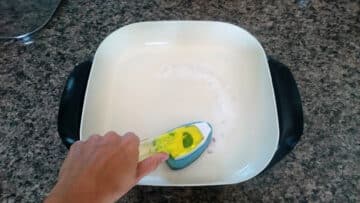
- After it has sat, use a damp cloth or even a plastic scouring pad (I use a non-scratch dish-wand) to gently scrub the stains. Some stains may take more effort than others, but take care not to scratch the ceramic. If the stain isn’t coming up, add more baking soda and water, and let it sit for longer.
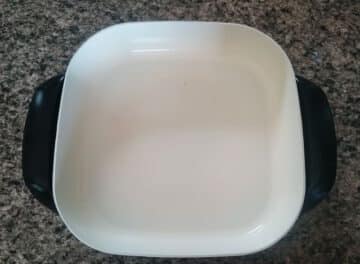
- Once the stain has lifted, use your cloth to wipe the baking soda paste away, and dry the pan thoroughly with a clean towel. Your skillet should now be stain-free!
Notes
- Important note before you begin: These are general tips and instructions. The user manual for your specific model should always be followed as they may differ.
- Discarding the grease:
- My suggestion would be to pour the grease (once it's cooled a bit) into a disposable container, such as an empty coffee can or a food package and simply throw it away.
- If you’d rather not toss a container or you don’t have one to spare, you can always pour the grease into a bowl and let it solidify in the fridge.
- Scoop it into a resealable bag, discard of it and then you can use paper towel to wipe away any remaining grease.
- Whatever you choose to do, we highly advise against pouring it down the drain. Despite the amount of hot water you use to wash it away, it can still eventually solidify and clog the pipes.
- For tough stains:
- The longer the baking soda sits, the easier it will come out.
- It's also important to note that I have found it's easier to get the stains out if you clean them after each time you cook.
- The longer you wait to clean the stains, the harder they are to get out.
- F.Y.I. The stains shouldn't affect the cooking ability of the skillet so this isn't a necessary step.
