

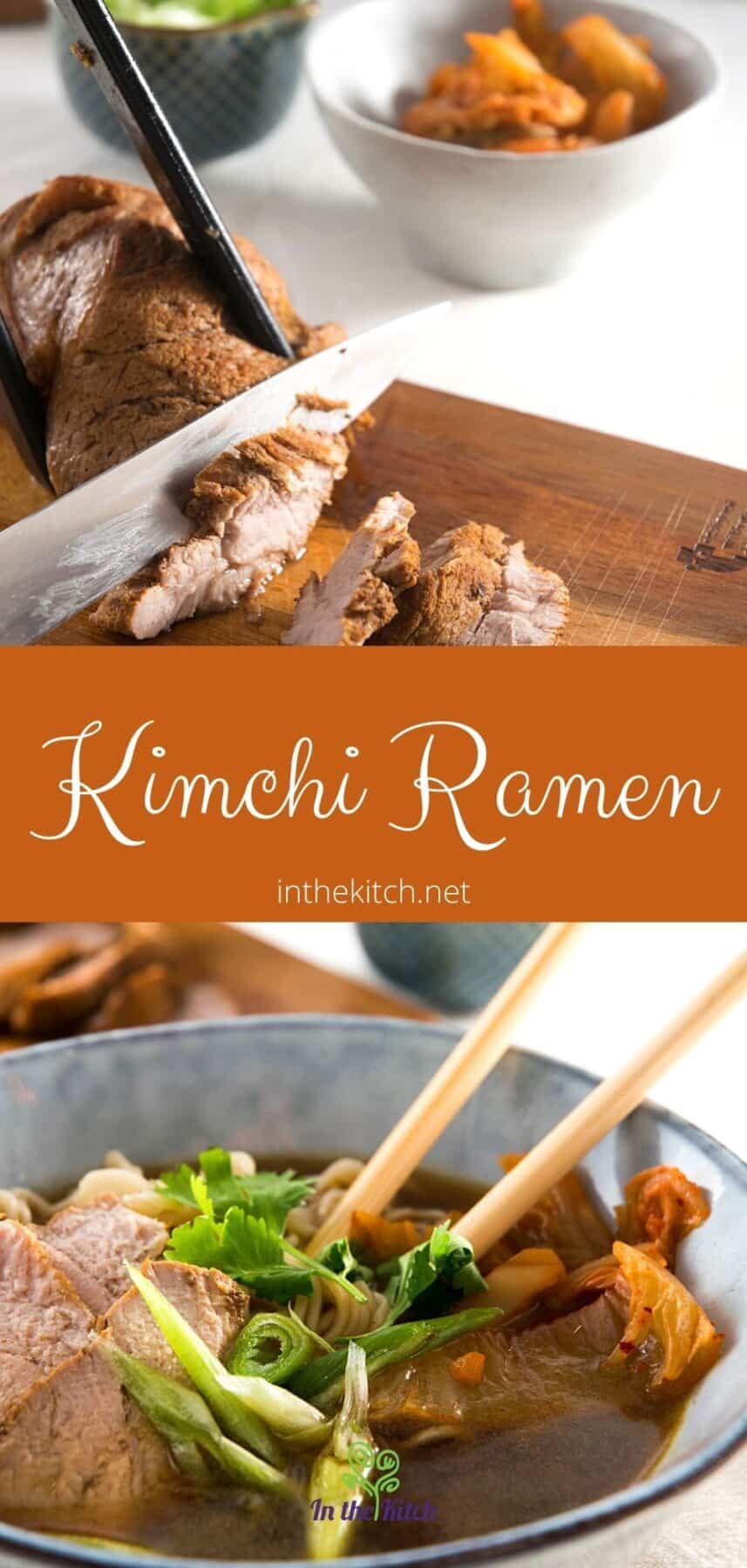
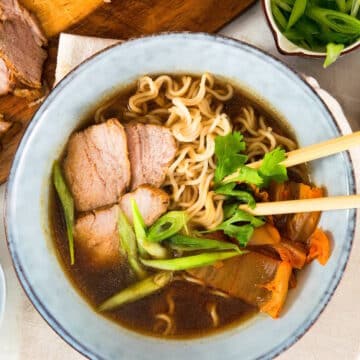
Korean Kimchi ramen is a great recipe if you want to elevate your ramen with spicy, sweet and savory flavors while still enjoying the nostalgic noodles. The marinated pork adds plenty of salty, meaty flavor while the kimchi and ginger give the soup a nice kick.
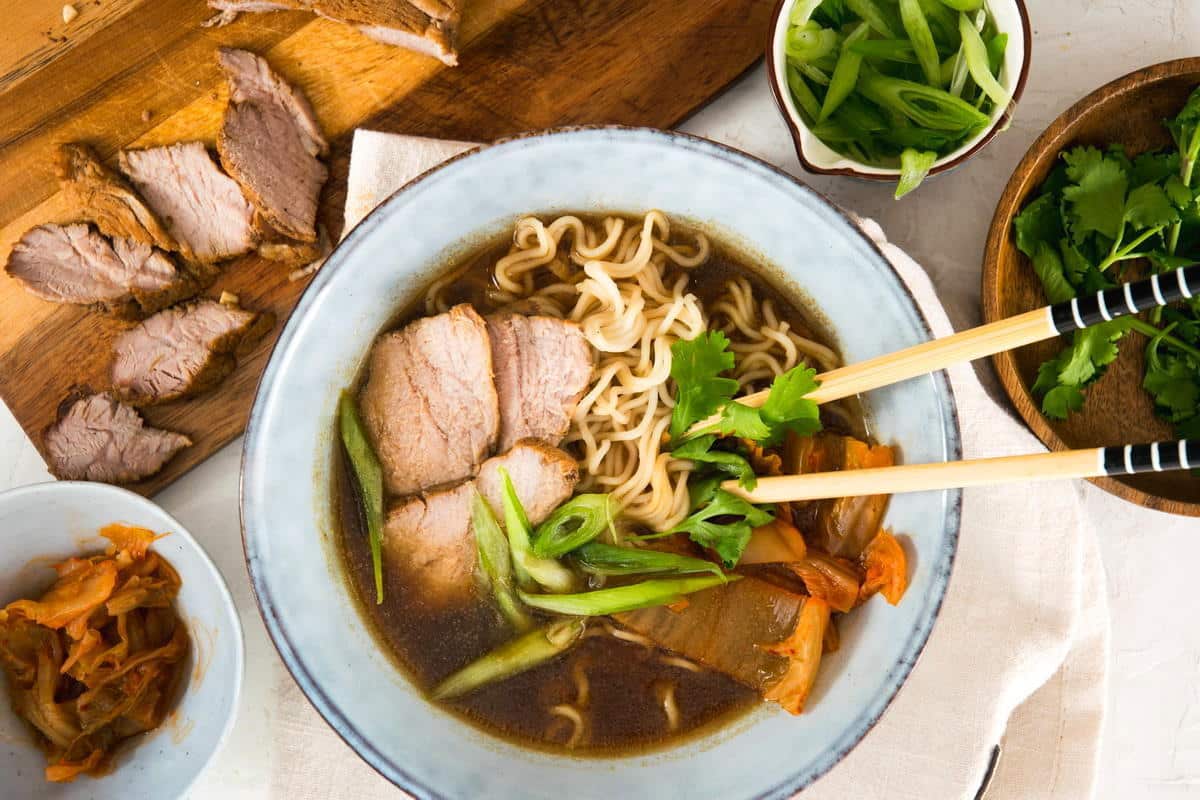
I have been experimenting with tweaking classic recipes with kimchi and the results are great. My family and I love to enjoy a bowl of this delicious, hot and cozy soup on a cool day.
Ramen is all the rage right now, even among younger kids, according to my daugher! It likely has something to do with the K-pop craze (it's taken over our house too).
The familiar, thin noodles will take next to no time to cook and kimchi adds cozy, umami flavor and a nice level of spice to ramen noodle soup.
Trust me, this recipe tastes soo much better than just heating up a package of noodles and calling it a day. Plus, you can make a big batch and heat it up over the next few days.
Another popular noodle dish I add kimchi to is this kimchi udon noodle stir fry.
Jump to:
What is Kimchi Ramen?
Many people know ramen as a cheap, packaged or cup of noodles and broth. By adding marinated pork tenderloin, kimchi, and other spices, packaged ramen can turn into a filling main dish...or in this case ramen soup - aka. Kimchi Ramen.
The star of the dish, Korean kimchi, is spicy fermented cabbage, specifically napa cabbage. It can be eaten alone or added into other dishes, like:
Ingredients
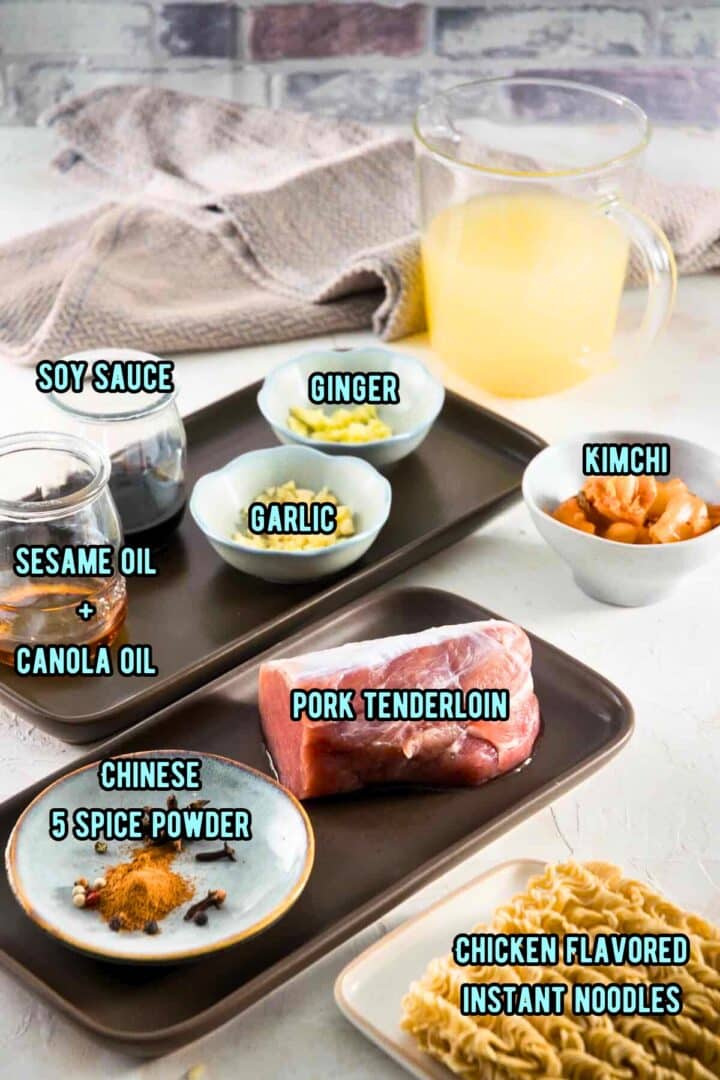
- pork tenderloin - Choose a pork tenderloin with a nice pinkish-red color; there will be minimal marbling due to the leanness of this cut. Avoid tenderloins that are dull in color. Be sure to trim any silverskin off (a shiny membrane) with a sharp, thin knife.
- kimchi - It's easy to find authentic kimchi at the supermarket but you can also make this daikon kimchi at home.
- Chinese 5 spice powder - This is a blend of cloves, star anise, cinnamon, fennel seeds and Sichuan peppercorns.
- chicken-flavored instant noodles - This recipe uses single serving instant noodle packages for an easy version of kimchi ramen soup. You can make the chicken broth with the powder packets that come with the noodles.
*Check recipe card for full ingredient amounts.
Recipe Tweaks
- More vegetables: Other than the kimchi, I recommend baby spinach or kale because of their vitamins and minerals and they will mix well into the soup.
- Soup cracker alternative: I have a tutorial for how to make crispy kale chips; they could be served on the side of your soup in place of crackers.
- Ramen egg: This is one of my favorite things to add! It is a soft-boiled egg soaked in a soy sauce mixture overnight. It adds an extra salty but creamy flavor to the dish with the marinade and soft egg yolk.
How to Make Kimchi Ramen
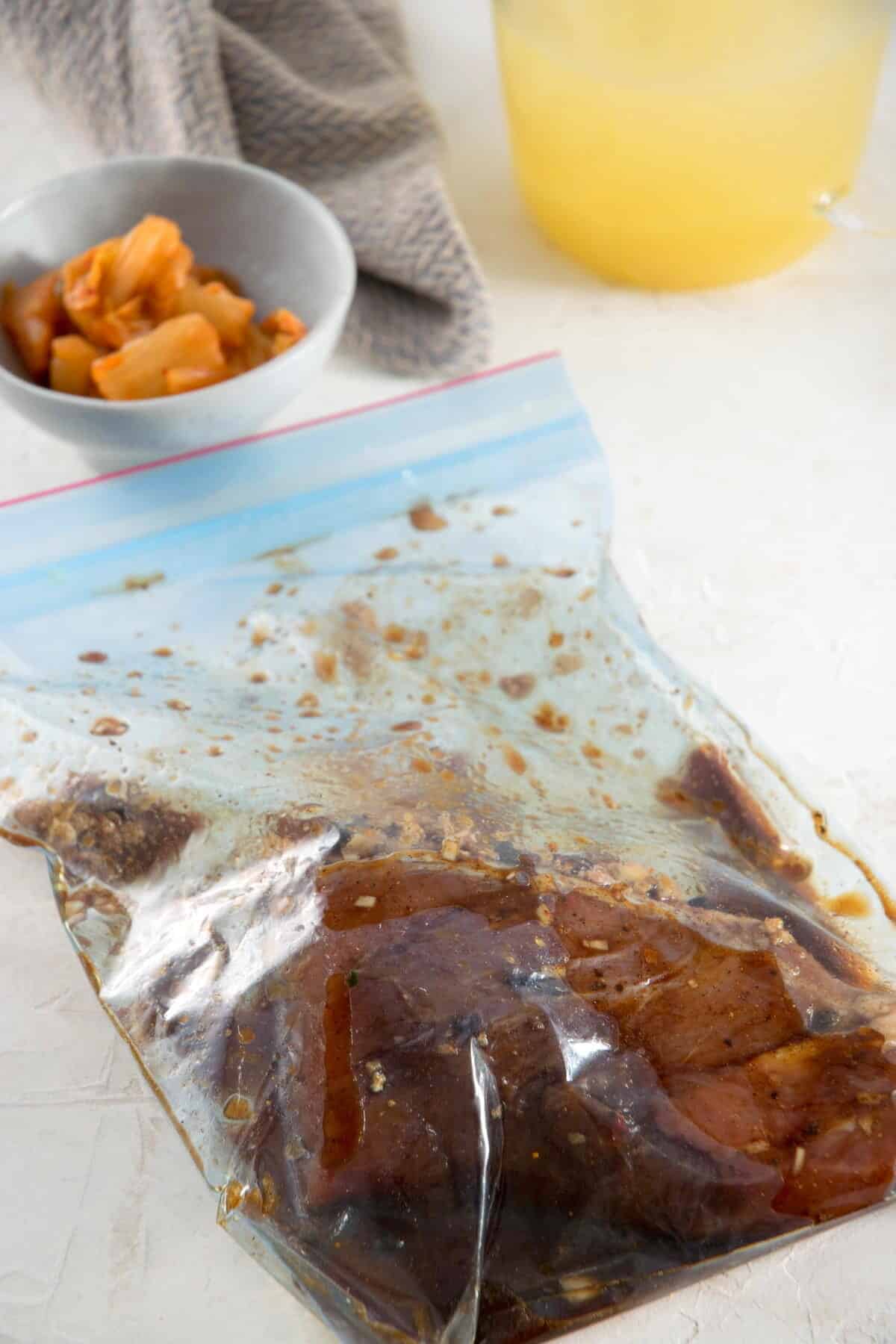
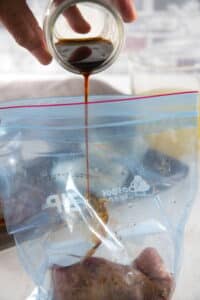
Step 1. Marinate the pork. Place the pork tenderloin in a plastic bag with the Chinese 5 spice, ginger, garlic, soy sauce and sesame oil. Seal the bag, massage it to coat the pork and marinate for 30 minutes in the fridge.
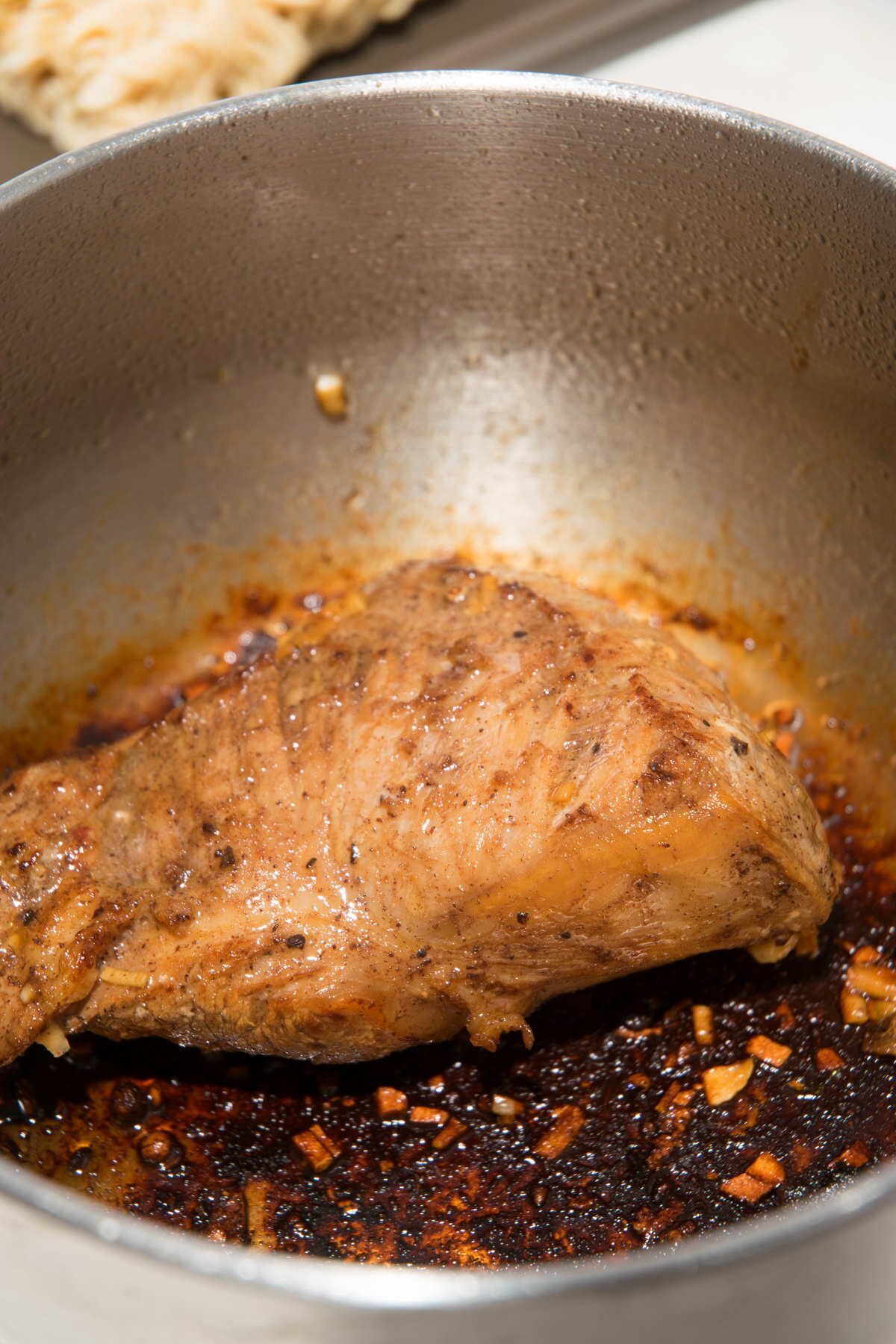
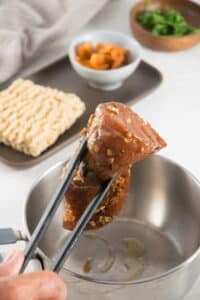
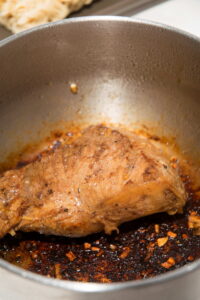
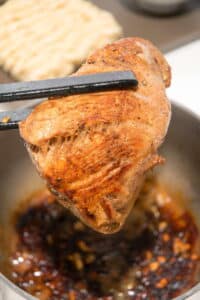
Step 2. Sear the pork. Remove the pork from the marinade. Season it with some salt and pepper. Heat a large heavy pot to medium-high heat, add the canola oil and sear the pork until browned on all sides (about 8-10 minutes). Remove from heat.
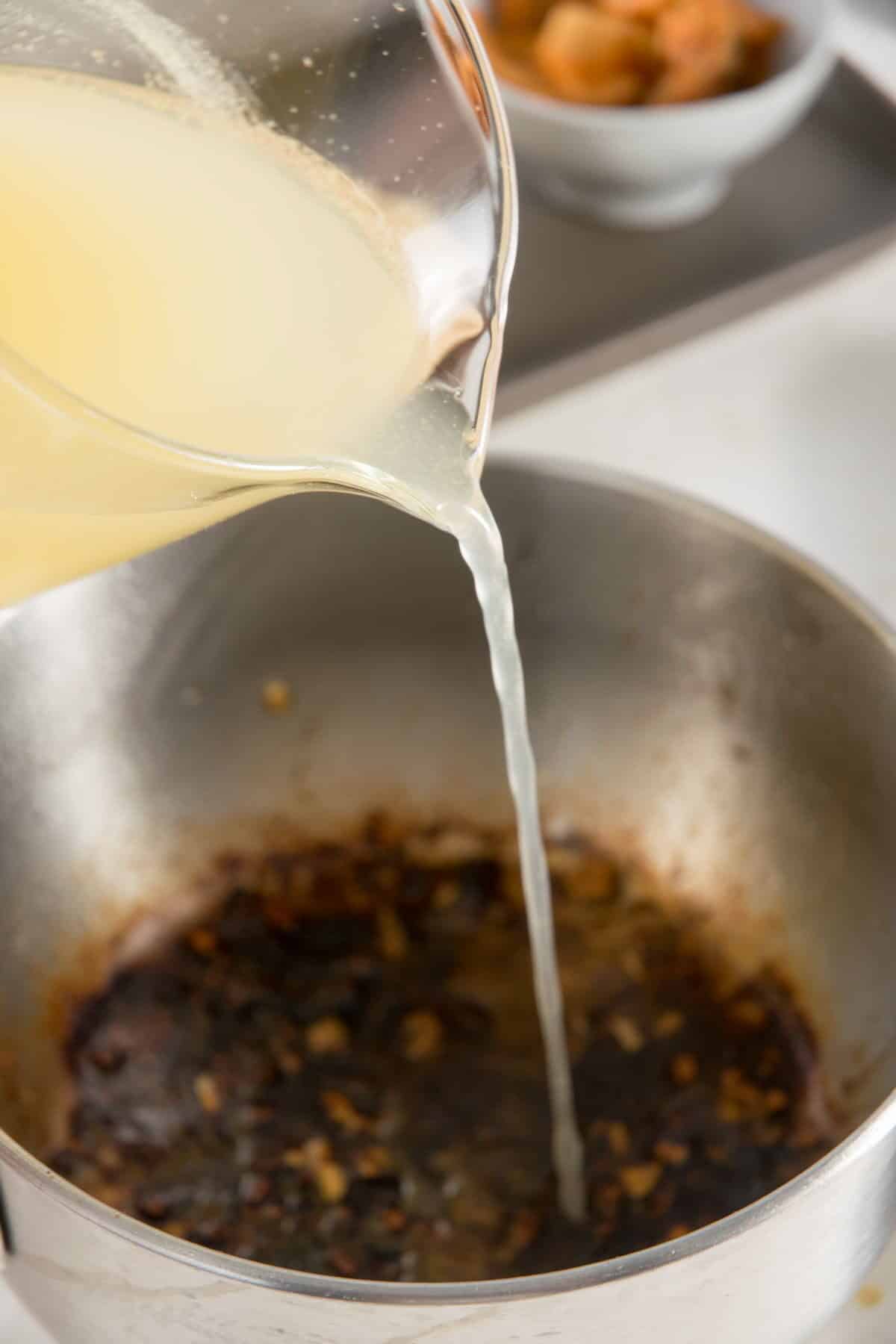
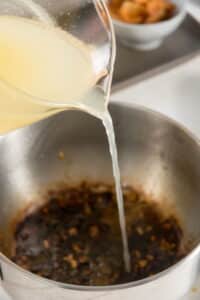
Step 3. Make the broth. Remove the pork and reserve it. Drain the oil from the pot. In the pot, combine the water with the 2 flavor packets that came with the instant noodles. Return to the stove over medium-high heat.
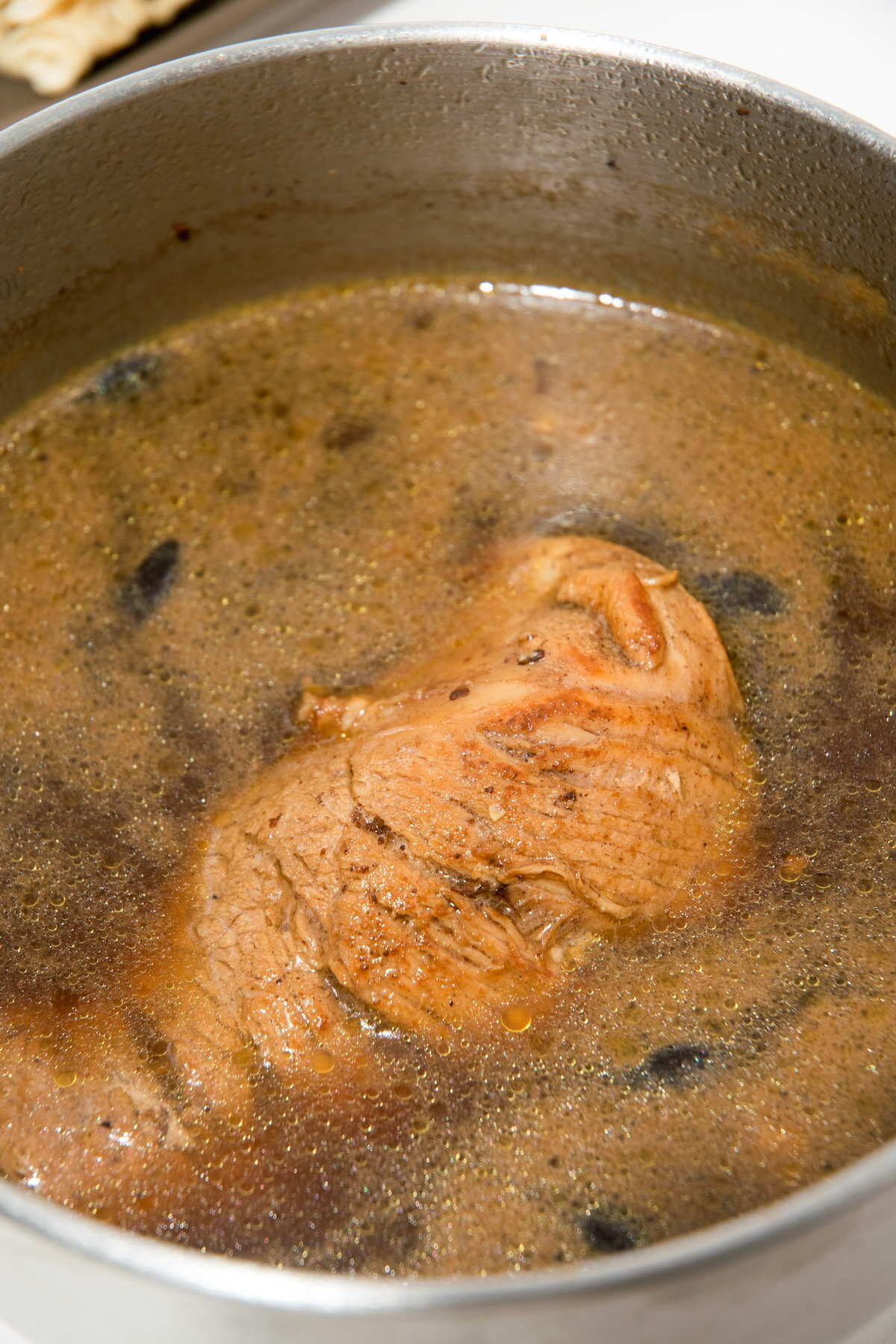
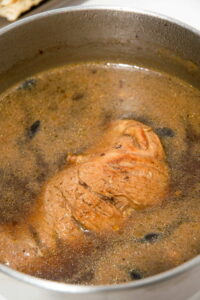
Step 4. Simmer. Bring the broth to a boil and then lower heat to a simmer, scraping the browned bits at the bottom so that they loosen. Return the pork to the pot and simmer for 10-15 minutes, until the internal temperature of the pork reaches 145°F.
👩🏻🍳 Chef's Note: Keeping the browned cooked-on bits in the pot will add flavor to your kimchi soup.

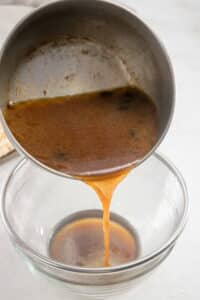
Step 5. Strain broth. Remove the pork from the broth to a cutting board. Strain the broth through a fine mesh strainer. Return the broth to the pot.

Step 6. Cook the noodles. Bring the broth to a boil, add the noodles and cook for 3 minutes.
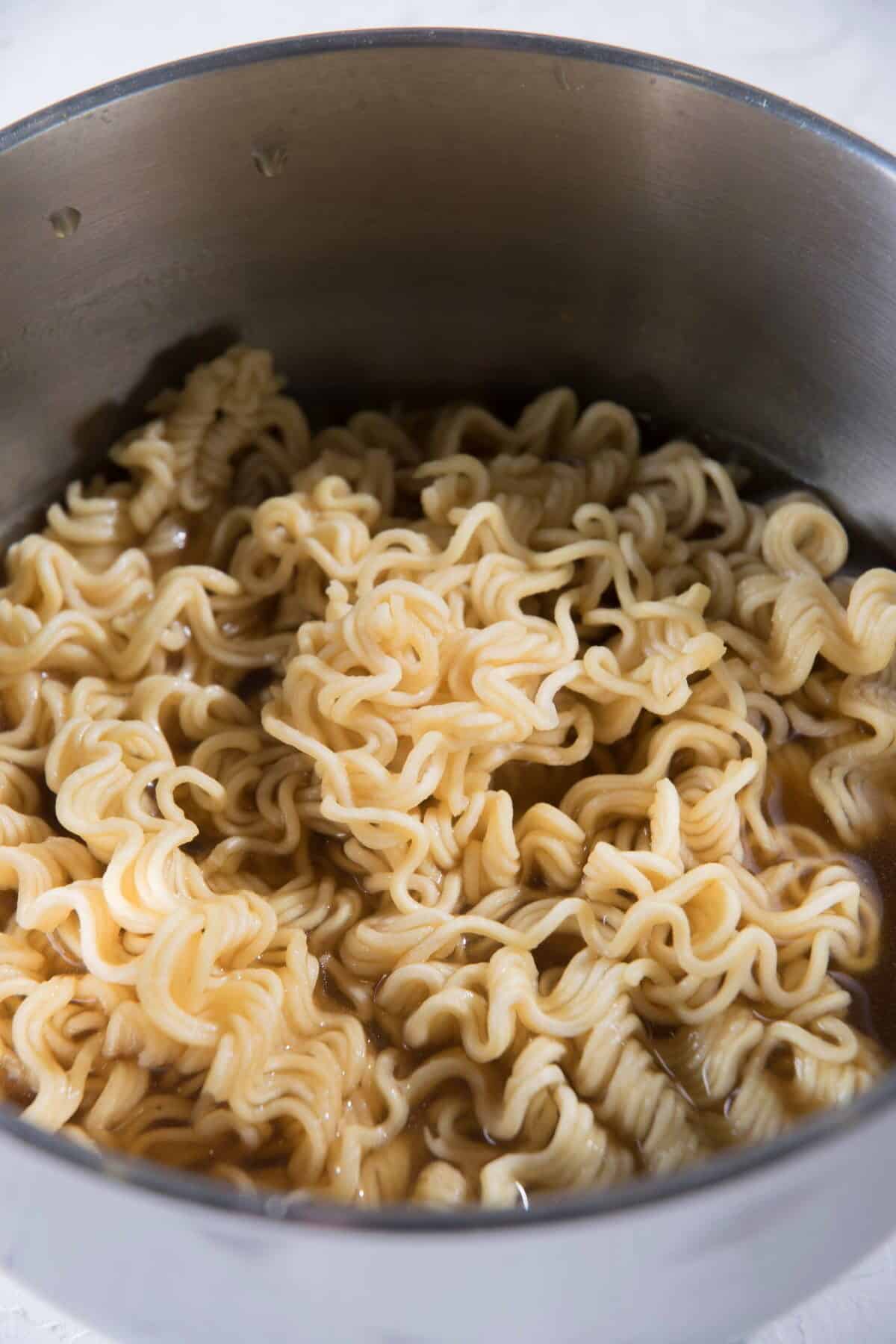
Chef's Note: Instant noodles don't take long to cook and can become mushy so keep an eye on them.
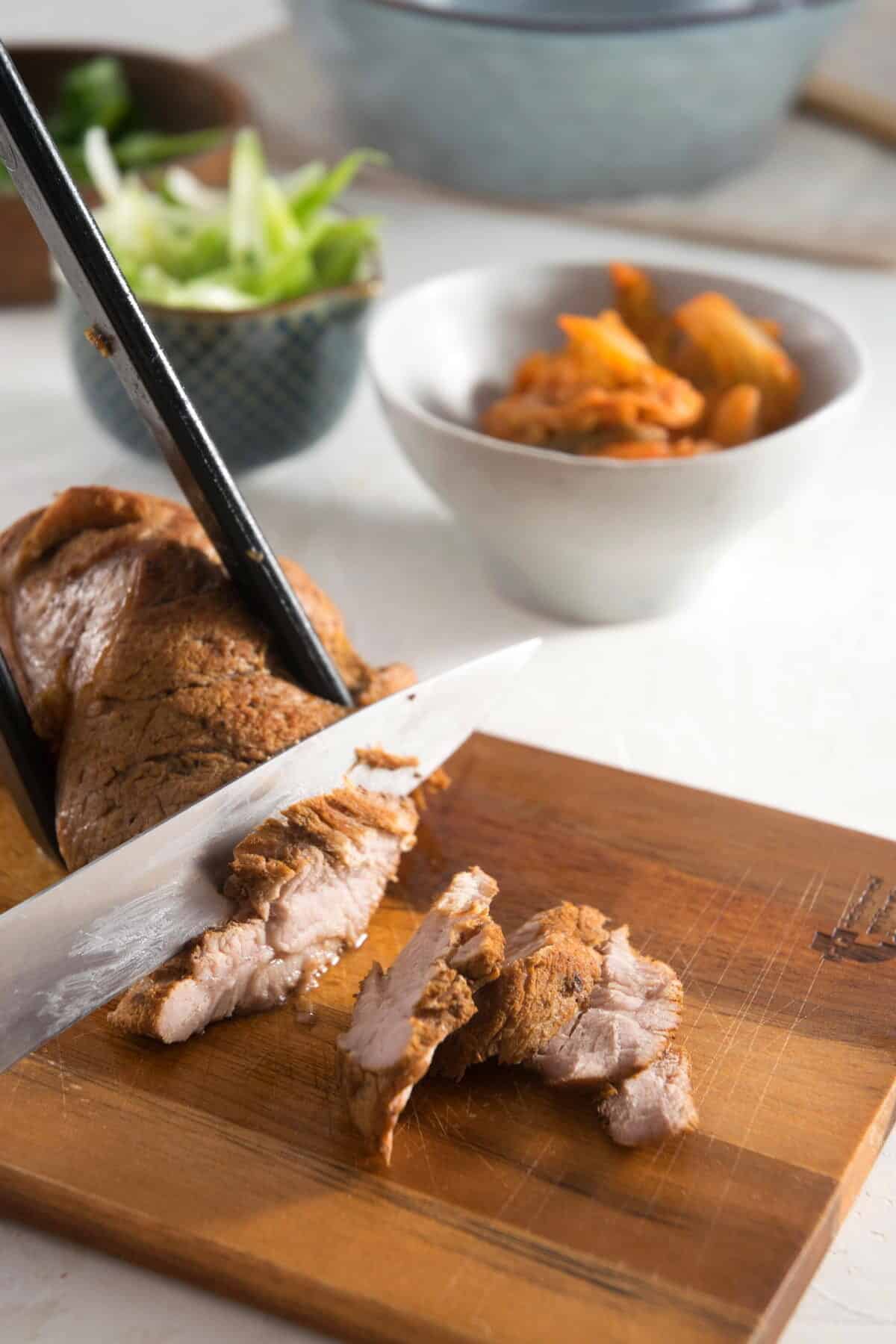
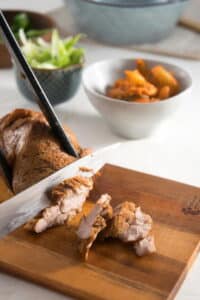
Step 7. Slice the pork. While the noodles are cooking, slice the pork into thin slices.
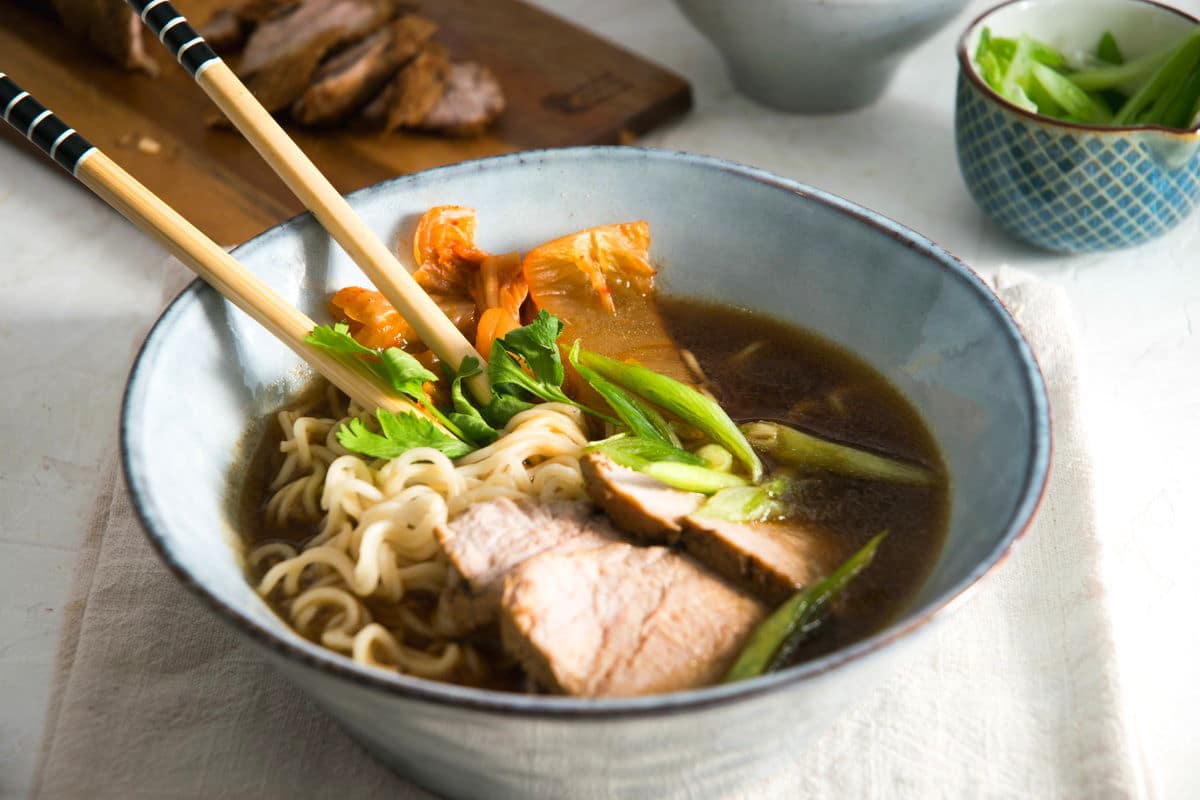
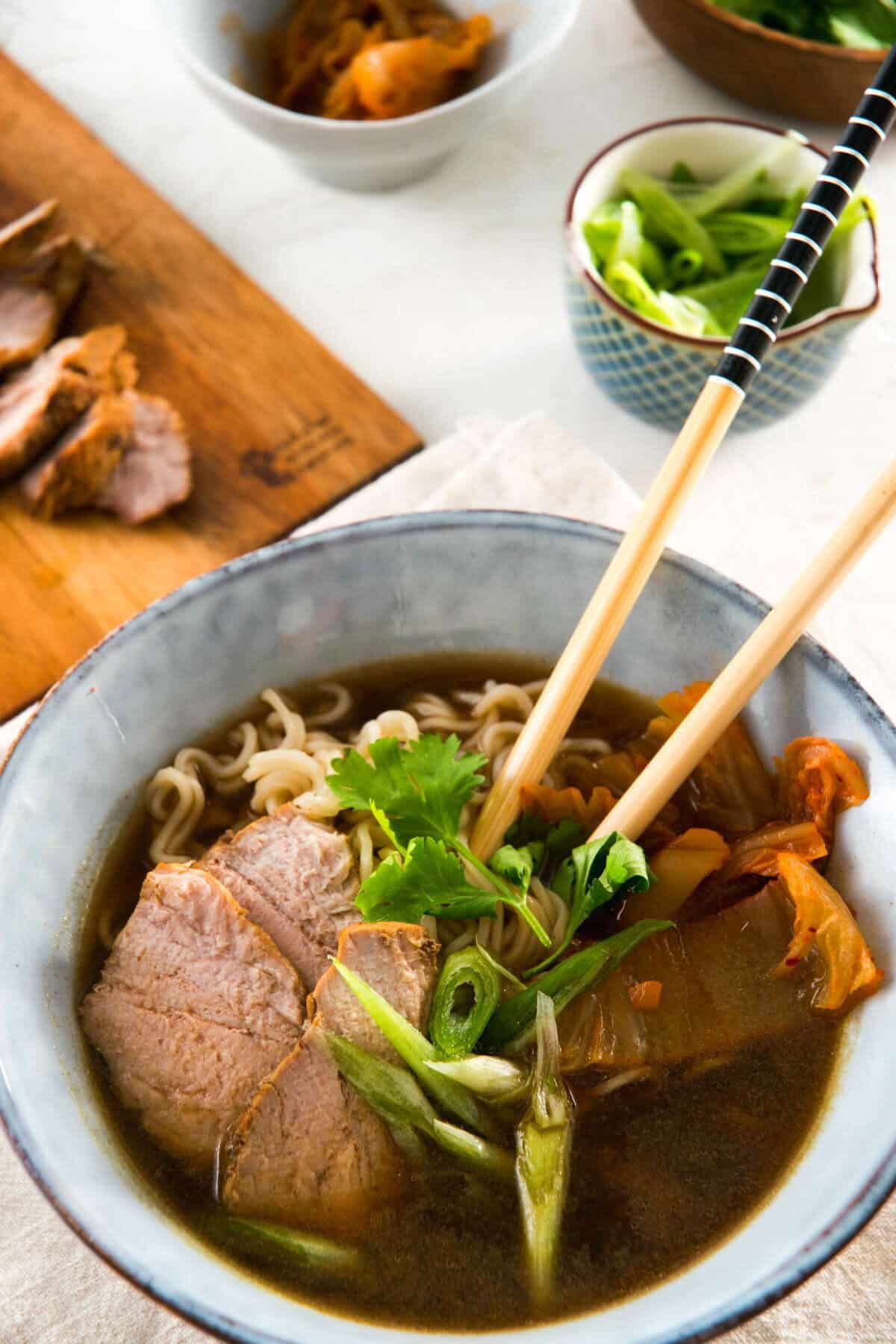
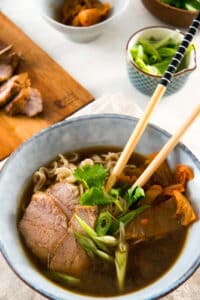
Step 8. Serve the kimchi ramen. Serve in bowls with the pork slices and kimchi, divided evenly. Top with the green onions, fresh cilantro and Sriracha sauce if you like a little more kick.
Joss' Helpful Tips
- Prep. Prep the toppings ahead of time and store separately in covered containers in the fridge.
- Stir the noodles. While the noodles are cooking, give them a quick stir so that they don't clump together.
- Consume the soup with the Japanese technique. To savor ramen the Japanese way, begin by bringing the bowl up close. Take a few sips of the broth, then slurp the noodles swiftly, aiming for a finish within 5 minutes, without any interruptions. Slurping the soup will cool the noodles and intensify the flavor.
Kimchi Ramen FAQs
Leftover soup should be covered and stored in the fridge for up to 3 days. Reheat on the stove.
The kimchi noodles are tasty, not too sour or too spicy, with just the right amount of heat.
You can, but the noodles might end up mushy when reheated. I would recommend removing the noodles from the soup before freezing. When you reheat it, you can use a fresh pack of ramen. Make sure to cool the soup first, use airtight containers and freeze for up to 3 months.
You can with a few tweaks: Make sure your kimchi is vegan for starters. Omit the pork (consider tofu instead). Use a vegetable broth instead of chicken.
Related Side Dishes to Consider



If you tried this Kimchi Ramen Recipe or any other recipe on my website, please leave a 🌟 star rating and let me know how it went in the 📝 comments below. And please share the recipe!
📋Recipe
Delicious Kimchi Ramen
Ingredients
- ½ pound pork tenderloin
- 1 tablespoon Chinese 5 spice powder
- 1 tablespoon fresh ginger - grated
- 1 tablespoon garlic - minced
- 2 tablespoons soy sauce
- 3 tablespoons sesame oil
- 1 tablespoon canola oil
- 5 cups water
- 2 chicken-flavored instant noodles - the single serve packages
- ½ cup kimchi
- green onions - sliced (to garnish)
- fresh cilantro leaves - to garnish
- sriracha sauce - optional
- salt and pepper
Instructions
- Place the pork tenderloin in a plastic bag with the Chinese 5 spice, ginger, garlic, soy sauce and sesame oil. Seal the bag, massage it to coat the pork and marinate for 30 minutes in the fridge.½ pound pork tenderloin, 1 tablespoon Chinese 5 spice powder, 1 tablespoon fresh ginger, 1 tablespoon garlic, 2 tablespoons soy sauce, 3 tablespoons sesame oil

- Remove the pork from the marinade. Season it with some salt and pepper.
- Heat a large heavy pot to medium-high heat, add the canola oil and sear the pork until browned on all sides (about 8-10 minutes). Remove from heat.1 tablespoon canola oil
- Remove the pork and reserve it. Drain the oil from the pot. Keeping the browned cooked-on bits in the pot will add flavor to your soup.
- In the pot, combine the water with the 2 flavor packets that came with the instant noodles. Return to the stove over medium-high heat.5 cups water
- Bring the broth to a boil and then lower heat to a simmer, scraping the browned bits at the bottom so that they loosen. Return the pork to the pot and simmer for 10-15 minutes, until the internal temperature of the pork reaches 145°F.
- Remove the pork from the broth to a cutting board. Strain the broth through a fine mesh strainer. Return the broth to the pot.
- Bring the broth to a boil, add the noodles and cook for 3 minutes.2 chicken-flavored instant noodles
- While the noodles are cooking, slice the pork.
- Serve in bowls with the pork slices and kimchi, divided evenly. Top with the green onions, fresh cilantro and Sriracha sauce if you like a little more kick.½ cup kimchi

Notes
- Vegetable tweak: If you wish to add more vegetables other than the kimchi, I recommend baby spinach or kale because of their vitamins and minerals and they will mix well into the soup.
- Fridge storage: Leftover soup should be covered and stored in the fridge for up to 3 days. Reheat on the stove.
- Freezer storage: I would recommend removing the noodles from the soup before freezing. When you reheat it, you can use a fresh pack of ramen. Make sure to cool the soup first, use airtight containers and freeze for up to 3 months. Thaw in the fridge.
- Asian technique: To savor ramen the Asian way, begin by bringing the bowl up close. Take a few sips of the broth, then slurp the noodles swiftly, aiming for a finish within 5 minutes, without any interruptions. Slurping the soup will cool the noodles and intensify the flavor.
Nutrition
Nutrition information on In the Kitch is provided as a courtesy and is an estimate only. It may not include toppings and/or sauces.




Joss says
Mmm this soup is so full of flavor! Definitely an upgrade from the instant noodle package.